Aqiqah
Aqiqah for the birth of your child
The Aqiqah (Arabic عقيقة, also spelled Aqiqa, Akika or Aqeeqah) is the animal that Muslims sacrifice in gratitude for a newborn child. The meat goes to family, neighbours and people in need.
If you cannot carry out the Aqiqah yourself, Asunya supports you with it. Tell us your wishes and we will get back to you personally.
How your request works
You tell us your wishes
In the form you state who the Aqiqah is for and how many animals you have in mind. If you like, also name a country, a time and how the meat should be distributed.
We review and get back to you
We check what can be done and get back to you personally. We give you the amount and the details in direct contact: when you write to us, or once you have filled in the form and we have replied.
The Aqiqah is carried out
Asunya supports you with the implementation. The meat is distributed to families in need.
The main rules in brief
The essentials first. For individual questions, ask your mosque community or a scholar.
How many animals?
Two sheep or goats for a boy and one for a girl are customary. According to some scholars, one animal is enough for a boy. If in doubt, ask your mosque community or a scholar.
When?
Ideally on the seventh day after the birth. If it is missed, the Aqiqah is made up later, as soon as possible.
Who carries it out?
Primarily the child's father or guardian. Others, such as the grandfather, can take it over or give an animal for it.
Your wishes for the Aqiqah
Tell us how you picture your Aqiqah, for example the country, the number of animals or the timing. This form is a request, not yet a donation.
- We review your wishes and get back to you personally at the email address you give.
- We then talk to you about the amount, country and timing. Only your name, email, number of animals and who the Aqiqah is for are required.
Frequently asked questions
Is the form already a donation?
No. The form is a request. We review your wishes and get back to you personally. We discuss the amount and the details with you in direct contact.
Is the Aqiqah obligatory?
Most scholars classify the Aqiqah as a confirmed Sunnah, that is, a strongly recommended but not obligatory act. If in doubt, ask your mosque community or a scholar.
Is one animal enough for a boy?
Two sheep or goats for a boy and one for a girl are customary. According to some scholars, it is permitted to sacrifice just one animal for a boy as well.
Can I carry out the Aqiqah after the seventh day?
Yes. The seventh day after the birth is the best time. If it was missed, the Aqiqah is made up as soon as one is able to. The 14th and the 21st day are also mentioned.
May someone else carry out the Aqiqah for my child?
It is primarily the responsibility of the child's father or guardian. Others can take it over as well, for example the grandfather. Giving a sound animal as a gift for the Aqiqah is considered unobjectionable.
Can I fulfil the Aqiqah with a general cash donation?
A general cash donation does not replace the Aqiqah. If you cannot carry it out yourself, you can commission an organisation to do so. That is then a donation for exactly this purpose.
Is the Aqiqah the same as the sacrifice at Eid al-Adha?
No. The Aqiqah belongs to the birth of a child; the sacrifice at Eid al-Adha (Qurban) is something different. With a donation through an organisation, the two purposes are kept separate.
From our projects
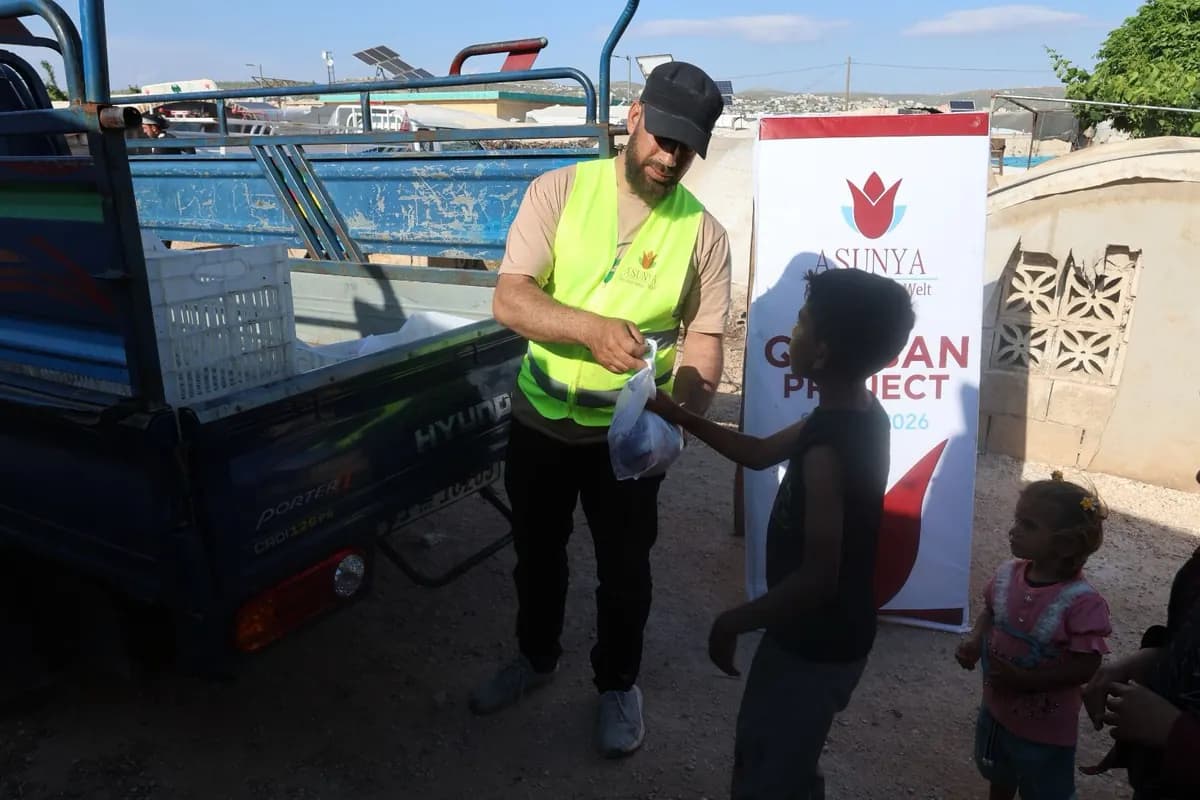
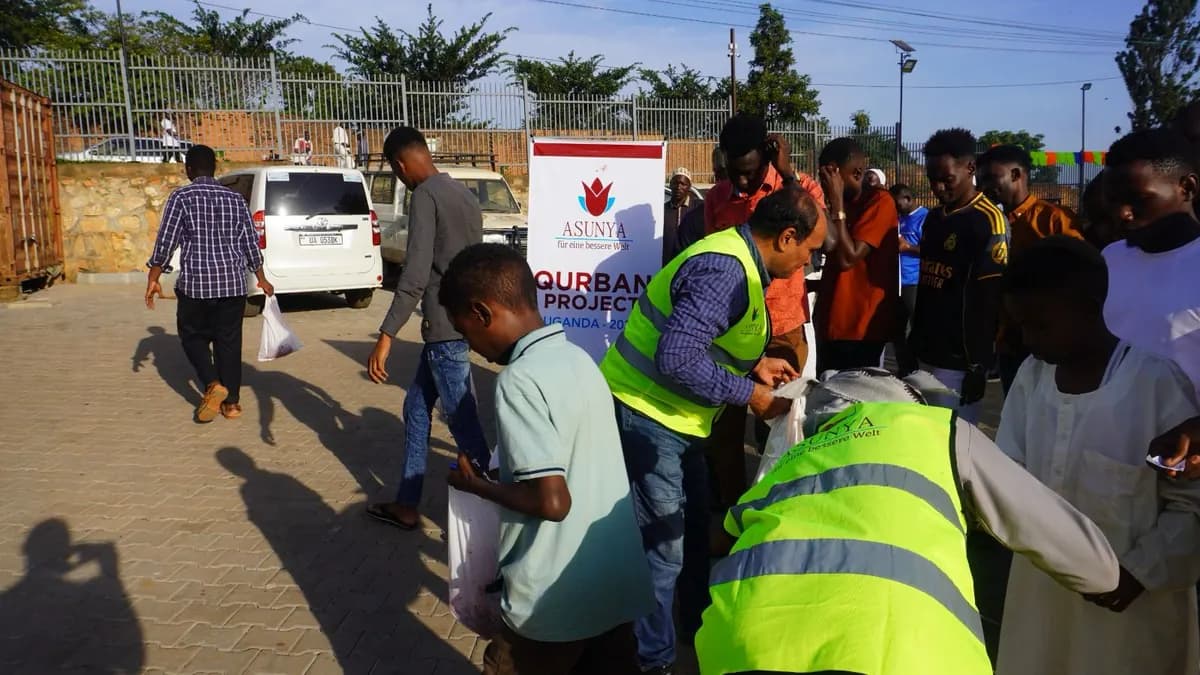
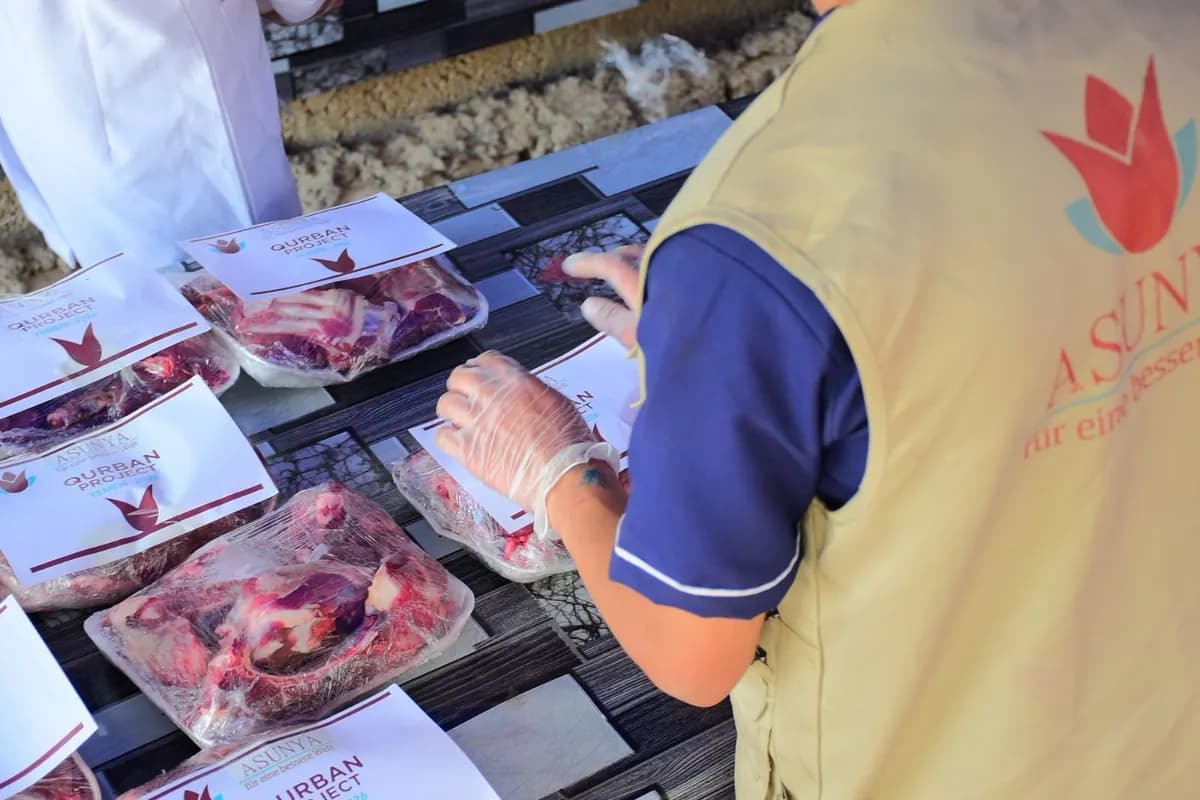
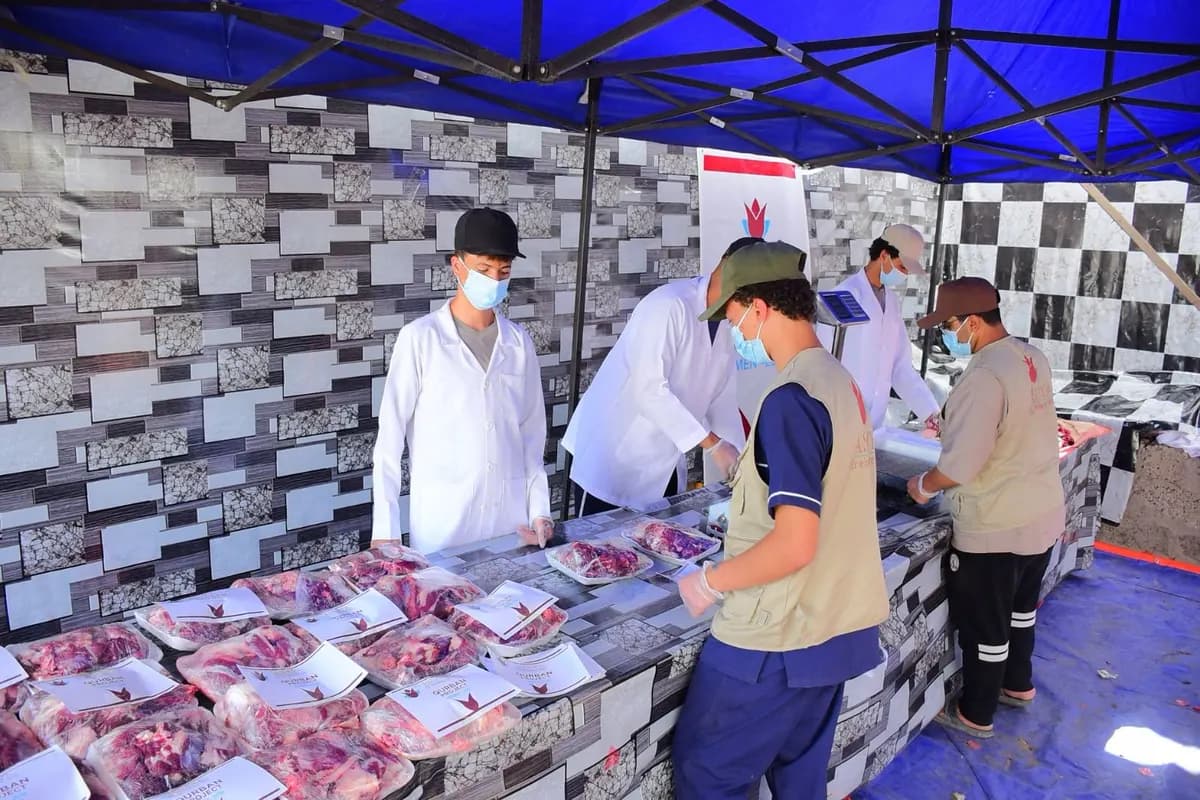
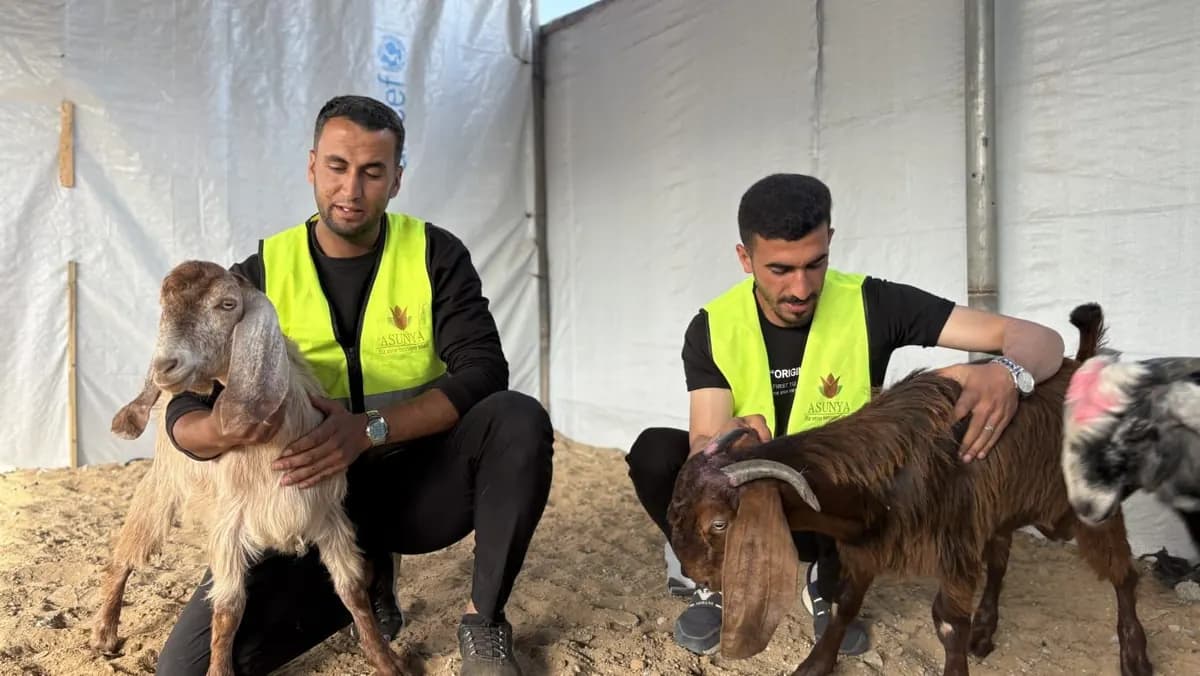
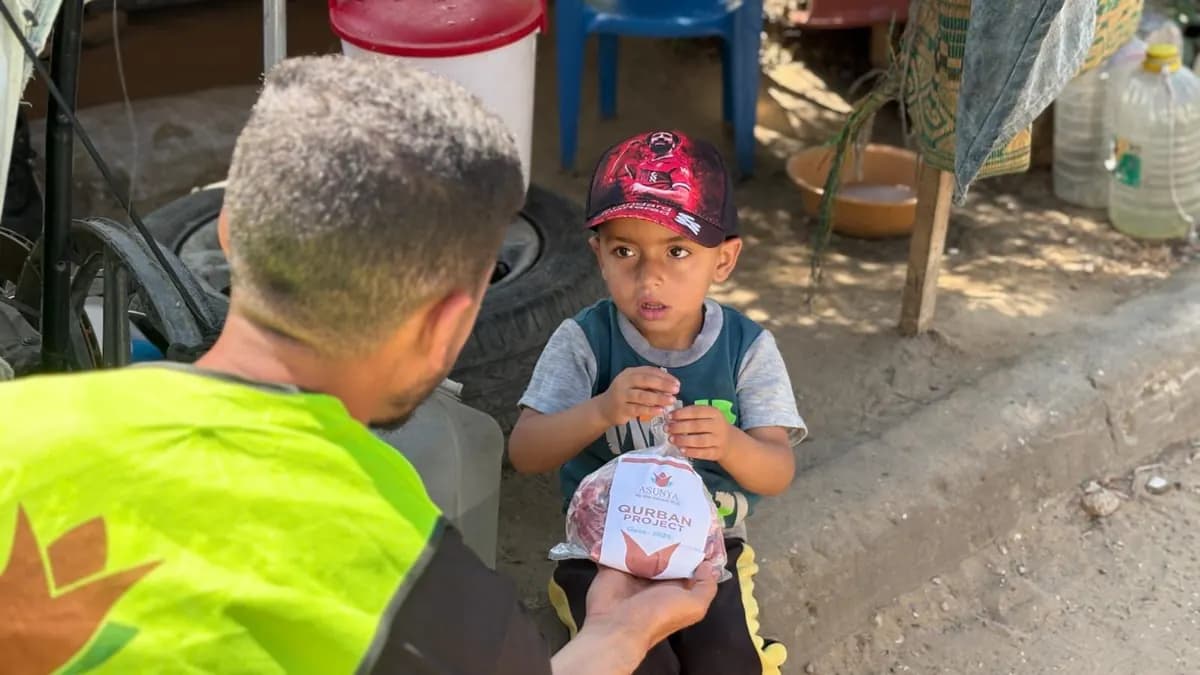
This is what a distribution of sacrificial meat looks like with us. The photos are from Asunya's Qurban projects, not from an Aqiqah.